Before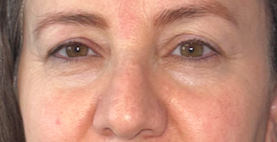
After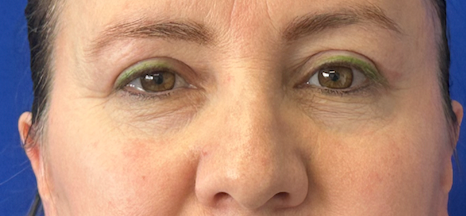
Case 1
Blepharoplasty
40s Female. Blepharoplasty — 2.5-month postoperative result.
Eyelid surgery · New York and New Jersey
Blepharoplasty is surgery of the eyelids. It removes extra skin from the upper lids, treats bags and loose skin of the lower lids, or both. Dr. Steven Ovadia is a board certified plastic surgeon with fellowship training in craniofacial surgery, with offices in New York City and New Jersey.
Overview
Blepharoplasty is the medical name for eyelid surgery. With age, the skin of the eyelids stretches, the muscle under it weakens, and the fat that cushions the eye pushes forward. The upper lids start to look heavy and the lower lids look puffy or tired, even when you are well rested.
Upper blepharoplasty treats the upper lids. Lower blepharoplasty treats the lower lids. They are separate operations that can be done on their own or together, and the surgical plan is built around your eyes and what you want to change.
The goal is a rested, natural look, with the shape of your eyes still your own. Surgery at the outer corner of the eye, called canthopexy or canthoplasty, is related but different: it supports the lower lid, and it can also be used to change the shape of the eye on purpose. More about canthopexy, canthoplasty, and the “fox eye” look.
Tell Dr. Ovadia about dry eyes, glaucoma, thyroid eye disease, and any earlier eye surgery, including LASIK. These affect how eyelid surgery is planned.
Upper lids
Upper blepharoplasty removes the extra skin of the upper eyelid. It brings back the crease of the lid, takes the weight off the lashes, and opens up the eye.
When needed, a small strip of the muscle under the skin or a small amount of fat is removed as well. Fat is removed conservatively, because taking too much leaves the eye looking hollow.
How it is done
The skin to be removed is measured and marked before surgery. Enough skin is left for the eyes to close fully and comfortably.
The incision follows the natural crease of the upper lid. The extra skin is removed, along with a small strip of muscle or a small amount of fat when needed.
The incision is closed with fine stitches. With the eyes open, the scar sits inside the fold of the lid.
Skin, lid, or brow
A heavy upper eyelid has three common causes, and each one has a different operation. Many people have more than one.
Treated with upper blepharoplasty
The skin of the upper lid has stretched and folds over the lid. The lid itself sits where it should. Upper blepharoplasty removes the extra skin.
Called ptosis
The edge of the lid itself sits low, because the muscle that opens the eye has stretched or weakened. Removing skin does not correct this. Ptosis repair, which tightens that muscle, is a different operation.
Treated with a brow lift
The brow has dropped and pushes skin down onto the lid. Removing eyelid skin alone does not fix this, and it can pull the brow lower. A brow lift raises the brow.
At your consultation, Dr. Ovadia examines your brows, your lids, and your eyelid skin to work out which of these is causing the heaviness.
When heavy lids affect vision
Upper eyelid skin can hang low enough to block the upper or outer part of your vision. People notice it when reading or driving, or find that they raise their eyebrows all day in order to see. When that is the case, upper eyelid surgery may be covered by insurance. More about insurance coverage.
Lower lids
Lower blepharoplasty treats bags under the eyes, loose skin of the lower lid, and the hollow between the lid and the cheek.
The bags are fat. It normally cushions the eye, and it pushes forward as the layer that holds it back weakens. They are not caused by fluid or by lack of sleep, which is why creams and rest do not remove them.
Two places for the incision
Transconjunctival
The incision is made on the inner surface of the lower lid, so there is no scar on the skin. This approach works well when the main concern is bags and the skin is still firm.
Subciliary
The incision runs just under the lower lashes and a short way into a natural line at the outer corner. This approach allows loose skin to be removed as well. The scar is fine and sits in the shadow of the lashes.
What is done with the fat
A measured amount of the fat that bulges forward is taken out to flatten the bag. It is removed conservatively, because taking too much leaves the eye looking hollow.
Instead of being removed, the fat is moved down over the rim of the eye socket to fill the groove between the lid and the cheek. This smooths the step between them.
When the area under the eye is hollow more than full, a small amount of your own fat, taken from elsewhere on the body, can be placed to restore volume. This is called fat grafting.
The lower lid is held in place by a tendon at the outer corner. When that support is loose, it is tightened at the same operation so the lid keeps its position as it heals.
Canthopexy and canthoplastyEvery surgery has risks. For eyelid surgery these include bleeding, infection, dry or irritated eyes, difficulty closing the eyes fully, a lower lid that is pulled down or turns outward, differences between the two sides, scarring, numbness of the lid, the need for revision surgery, and, rarely, a change in vision. Dr. Ovadia goes over them with you at your consultation.
The outer corner
The outer corner of the eye, where the upper and lower lids meet, is called the lateral canthus. A small tendon anchors it to the bone of the eye socket. That tendon holds the lower lid against the eye, and it sets the tilt of the eye: whether the outer corner sits level with the inner corner, above it, or below it.
Two operations work on this corner. They are often done together with blepharoplasty, and they can also be done on their own.
Supports the corner
The tendon stays attached. It is tightened and held with stitches placed on the inside, at the rim of the eye socket. It is the smaller of the two operations: the change is subtler and recovery is usually shorter.
Rebuilds the corner
The tendon is released, tightened, and re-attached to the rim of the eye socket in a new position. It gives a stronger correction and a larger change in shape, with a longer recovery.
Why it is done
After lower blepharoplasty, a loose lid can sit a little lower as it heals. Supporting the corner at the same operation helps the lid keep its position.
With age, or after earlier surgery, the lower lid can sag, turn outward, or show the white of the eye below the iris. Tightening the corner brings the lid back up against the eye.
Raising the outer corner gives the eye a longer, more upswept, almond shape. This is the surgery behind the look often called fox eye or cat eye.
The “fox eye” look
“Fox eye” and “cat eye” are popular names for an eye whose outer corner sits a little higher than the inner corner, with a lifted outer brow. It is a look, not a single operation, and it is created in different ways for different faces:
The diagrams show the idea. They are not a prediction of an individual result.
How far the corner can be raised depends on your anatomy: the shape of the eye socket, how far forward the eyes sit, and how firm the lower lid is. The change is measured in millimeters, and a small change reads clearly on a face. Surgery also lasts far longer than a trend does. Dr. Ovadia plans a change that fits your face and goes over what is realistic for you.
Real results
These are Dr. Ovadia's own patients. Each case notes how far out from surgery the “after” photo was taken, because swelling takes time to settle.
Case 1
40s Female. Blepharoplasty — 2.5-month postoperative result.
Actual patients of Dr. Steven Ovadia. Individual results vary. More cases are in the main gallery.
Recovery
The eyelids are swollen and bruised at first, often more on the second and third day than on the first. Most of it settles over the first two weeks, and the rest fades gradually.
Cold compresses in the first days help with swelling. Sleeping with the head of the bed elevated is important.
You are given ointment for the incisions and drops to keep the eyes comfortable. The ointment can blur your vision for a short while after you put it on.
The eyes can feel dry, gritty, or watery, and bright light can be uncomfortable. The lids can feel tight and may not close completely at first. This improves as the swelling goes down.
Stitches in the eyelid skin typically come out at 5 to 7 days. An incision on the inside of the lower lid has no stitches that need to come out.
You see the change as the bruising clears. The scars start out pink and fade over the following months.
Normal swelling comes on slowly. A rapid increase in swelling is something to watch for, and it should be brought to your physician's attention right away. The same is true of severe pain or any change in your vision.
A general timeline
This is a general guide. Everyone heals differently. During your recovery, Dr. Ovadia will review your timeline with you.
Cost
Eyelid surgery done to change appearance is cosmetic and is not covered by insurance. The cost depends on whether the upper lids, the lower lids, or both are treated, whether the outer corner is included, and whether it is done together with other surgery. You receive a quote after your consultation.
Upper eyelid surgery may be covered when the eyelid skin blocks part of your vision. Insurance plans ask for proof of that before surgery.
Lower eyelid surgery, canthopexy, and canthoplasty done for appearance are unlikely to be covered. Every plan sets its own criteria. Coverage is not guaranteed.
If you have questions about possible insurance coverage for surgery, call or email us and we will go over it with you.
Your surgeon
Dr. Ovadia is board certified by the American Board of Plastic Surgery. After his plastic surgery training he completed two fellowships: gender-affirming surgery at Johns Hopkins, and craniofacial and pediatric plastic surgery at UT Austin / Dell Children's Hospital.
Craniofacial surgery is surgery of the bones and soft structures of the face and skull, including the eye sockets and the eyelids. He performs eyelid surgery on its own and together with other facial surgery and facial feminization surgery. He sees patients in New York City and in Jersey City and Millburn, New Jersey.
Questions
Upper blepharoplasty removes extra skin, and sometimes a little muscle or fat, from the upper eyelid through an incision in its crease. Lower blepharoplasty treats bags, loose skin, and hollows under the eye through an incision inside the lid or just below the lashes. They can be done separately or at the same operation.
Blepharoplasty is planned to keep the shape of your eyes. It removes what is making the lids look heavy or puffy. Changing the shape or tilt of the eye is a different goal, and it is done with surgery at the outer corner: canthopexy or canthoplasty.
Both tighten the outer corner of the eye. In a canthopexy, the tendon at the corner stays attached and is supported with stitches. In a canthoplasty, the tendon is released and re-attached in a new position. Canthoplasty gives a larger change and has a longer recovery.
Fox eye, or cat eye, is the name of a look: an outer corner that sits a little higher than the inner corner, with a lifted outer brow. In surgery it is created by raising the outer corner with a canthopexy or canthoplasty, often together with a brow lift or blepharoplasty. Which of these is right for you depends on your anatomy.
Surgery at the outer corner is meant to last, and it is not easy to undo. That is a reason to plan a change that suits your face and not only a current trend. Dr. Ovadia goes over what is realistic for you at your consultation.
For the upper lid, in the natural crease, where the scar is hidden when the eyes are open. For the lower lid, either inside the lid, with no scar on the skin, or just below the lashes. Eyelid skin usually heals with a fine scar that fades over several months.
The result is long-lasting. The skin and fat that are removed do not come back, but the face keeps aging. Upper lids can loosen again over many years, and a brow that drops can make them look heavy again. Lower blepharoplasty rarely needs to be repeated.
It depends on the cause. Dark circles that are shadows cast by bags or by a hollow under the eye usually improve. Dark circles that come from the color of the skin itself do not change with surgery.
With extra skin, the lid itself sits in a normal position and skin folds over it. With ptosis, the edge of the lid sits low because the muscle that opens the eye is weak. Removing skin does not correct ptosis. Dr. Ovadia checks for both at your consultation.
Not right away. Both are stopped for a period after surgery while the incisions heal. Dr. Ovadia tells you when it is safe, based on how you are healing.
Eyelid surgery done to change appearance is not covered. Upper eyelid surgery may be covered when the skin blocks part of your vision and your plan's criteria are met, which usually means photographs and a visual field test. Coverage is not guaranteed. Lower eyelid surgery done for appearance is unlikely to be covered.
Yes. It is often done together with a brow lift, a facelift, or fat grafting to the face. Whether it is safe to combine procedures depends on your health and how long the operation would be.
Yes. Phone and video consultations are available, in addition to in-person visits in New York City, Jersey City, and Millburn, New Jersey.
Next step
Dr. Ovadia will examine your eyelids and brows, go over what you are hoping to change, and explain whether upper or lower blepharoplasty, surgery of the outer corner, or a combination is the best fit.
225 Broadway, Suite 3100, New York, NY
377 Jersey Ave, Suite 440, Jersey City, NJ
90 Millburn Ave, Suite 206, Millburn, NJ
Phone and video consultations available · info@ovadiaps.com